How to Read Football Odds: A Complete Guide for Filipino Bettors (World Cup 2026)

Quick Answer
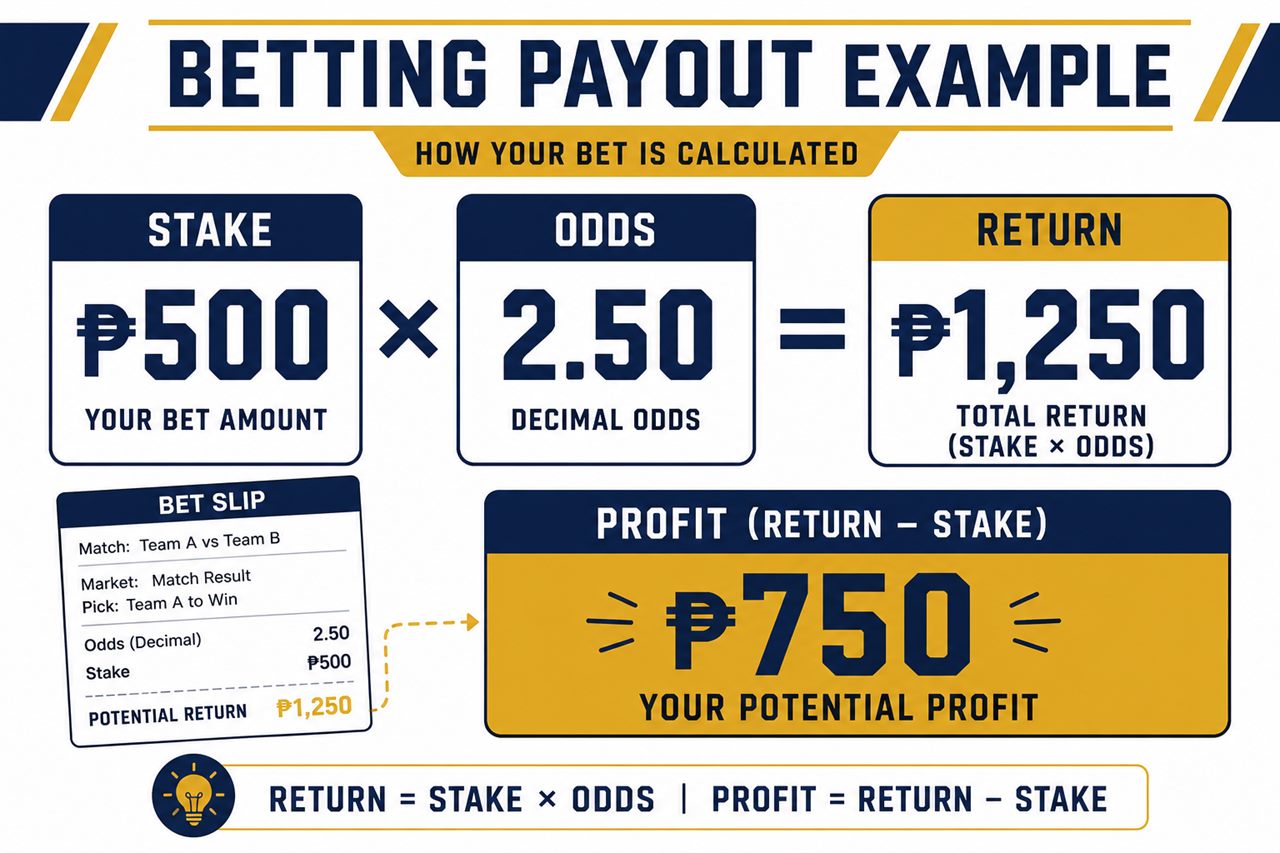
Football odds tell you two things at once: how likely the bookmaker thinks an outcome is, and how much you win if it happens. In the Philippines you will mostly see decimal odds (like 2.50). Multiply your stake by the decimal number and that is your total return. So a ₱500 bet at 2.50 pays back ₱1,250, which is ₱750 profit plus your ₱500 stake. Everything else in this guide builds on that one idea.
If you are planning to bet on the FIFA World Cup 2026, the first skill you need is not picking winners. It is reading the odds. Every prediction, every accumulator, every live bet starts with a number on the screen, and if you do not know what that number means, you are gambling blind.
The good news is that football odds are simpler than they look. Once you understand the three formats and one short formula, you can glance at any match and instantly know two things: the chance the bookmaker is giving an outcome, and the peso payout waiting for you. This guide walks you through all of it, in plain English, with examples in peso that match how betting actually works for players here in the Philippines.
By the end you will be able to read a full World Cup 2026 betting board, compare two sportsbooks side by side, and spot the value that beginners walk straight past.
What Are Football Odds, Really?
Odds are the price of a bet. Just like a sari-sari store puts a price on a soft drink, a sportsbook puts a price on an outcome: Brazil to win, Over 2.5 goals, a draw at half-time.
That price does two jobs at the same time:
- It shows implied probability. Lower odds mean the outcome is more likely. When France are 1.40 to beat a smaller nation, the book is telling you they expect France to win most of the time.
- It sets your payout. Higher odds mean a bigger return for the same stake, because you are taking on more risk.
Here is the key mindset shift for beginners: odds are not predictions, they are prices. The bookmaker is not telling you who will win. It is telling you what it costs to back each outcome, with a built-in margin so the book makes money over time. Your job is to find prices that are higher than the true chance of the outcome. That is called value, and it is the only way to win long term.
The Three Odds Formats You Will See
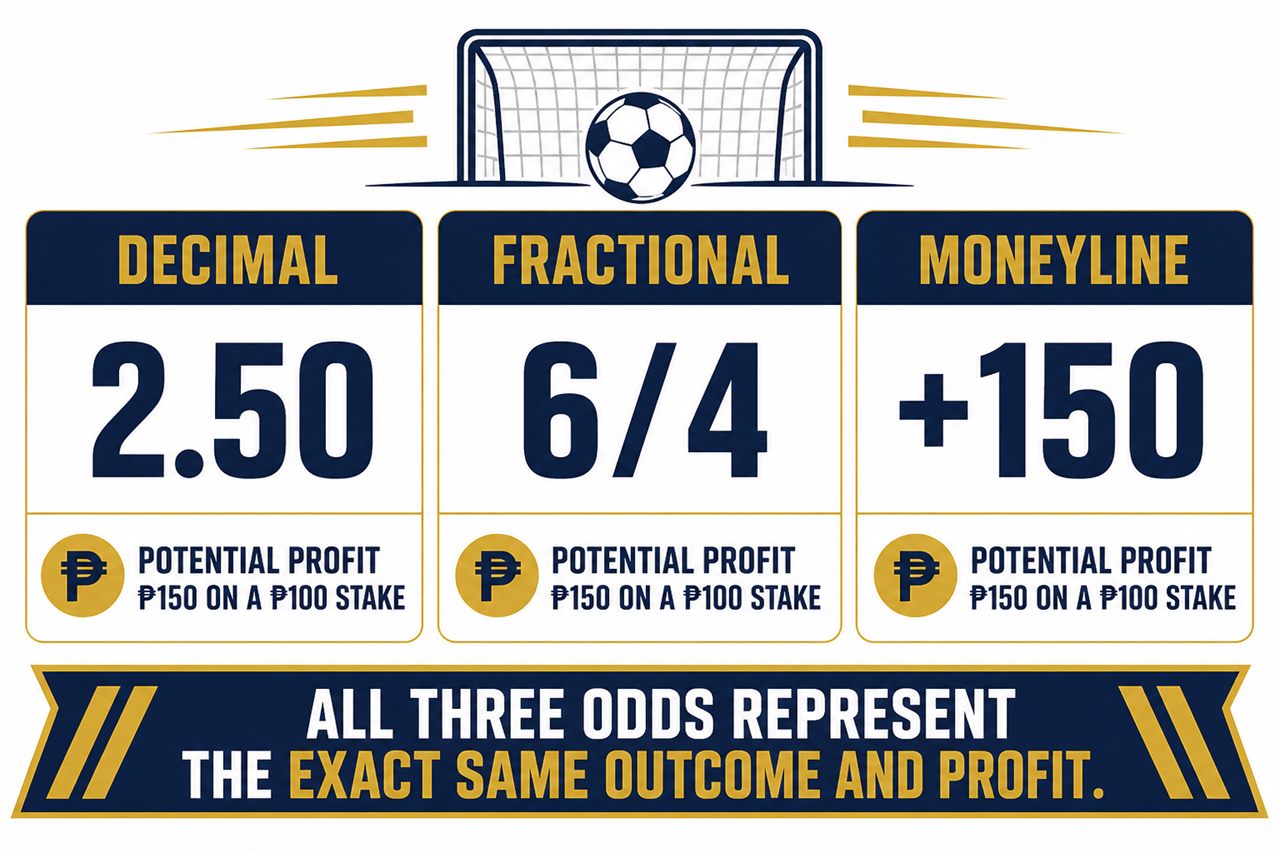
The same bet can be written three different ways. The outcome and the payout are identical; only the notation changes. Filipino bettors run into all three, so learn to read each one.
1. Decimal Odds (the default in the Philippines and Asia)
Decimal odds are the easiest format and the one you will see most often on sites used by Filipino players.
- What it looks like: 1.40, 2.50, 6.00
- What it means: the number is your total return per ₱1 staked, including your stake back.
- How to read it fast: stake × decimal = total return.
Example: You bet ₱1,000 on Argentina at 1.80. Total return = ₱1,000 × 1.80 = ₱1,800. Your profit = ₱1,800 minus your ₱1,000 stake = ₱800.
Anything above 2.00 means you win more than you stake (an underdog or a less likely outcome). Anything below 2.00 means a favourite, where you risk more to win less.
2. Fractional Odds (the traditional UK format)
You will see fractional odds on British sportsbooks and in a lot of World Cup outright markets (who will win the tournament).
- What it looks like: 2/5, 6/4, 5/1 (read as “two to five”, “six to four”, “five to one”)
- What it means: the profit you win relative to your stake. The first number is what you win, the second is what you stake.
- How to read it: profit = stake × (first number divided by second number).
Example: You bet ₱1,000 at 5/1. Profit = ₱1,000 × (5 ÷ 1) = ₱5,000. Total return = ₱5,000 profit plus your ₱1,000 stake = ₱6,000.
Quick conversion to decimal: divide the fraction and add 1. So 5/1 = 5 + 1 = 6.00 in decimal. 6/4 = 1.5 + 1 = 2.50.
3. Moneyline / American Odds
Moneyline odds (also called American odds) show up on US-facing sportsbooks and many live betting screens. They use a plus or minus sign.
- Positive number (+150): how much profit you win on a ₱100 stake. +150 means a ₱100 bet wins ₱150 profit.
- Negative number (-200): how much you must stake to win ₱100 profit. -200 means you stake ₱200 to win ₱100.
Example: Brazil at -250 means you stake ₱2,500 to win ₱1,000 profit. The minus sign always marks the favourite.
A positive moneyline marks the underdog; a negative one marks the favourite. If you ever feel lost, convert it to decimal and the picture clears up instantly.
Side by Side: the Same Match in All Three Formats
| Outcome | Decimal | Fractional | Moneyline | ₱1,000 stake returns |
|---|---|---|---|---|
| Favourite to win | 1.50 | 1/2 | -200 | ₱1,500 |
| Even contest | 2.00 | 1/1 (evens) | +100 | ₱2,000 |
| Underdog to win | 3.50 | 5/2 | +250 | ₱3,500 |
| Big outsider | 6.00 | 5/1 | +500 | ₱6,000 |
💡 Tip: If you only learn one format, learn decimal. Most sportsbooks let you switch the display to decimal in settings, and it makes payout maths instant.
How to Turn Odds Into Probability
This is the single most useful trick in betting, and almost no beginner knows it. Every set of odds hides a percentage chance, called implied probability. Learn to see it and you stop overpaying for favourites.
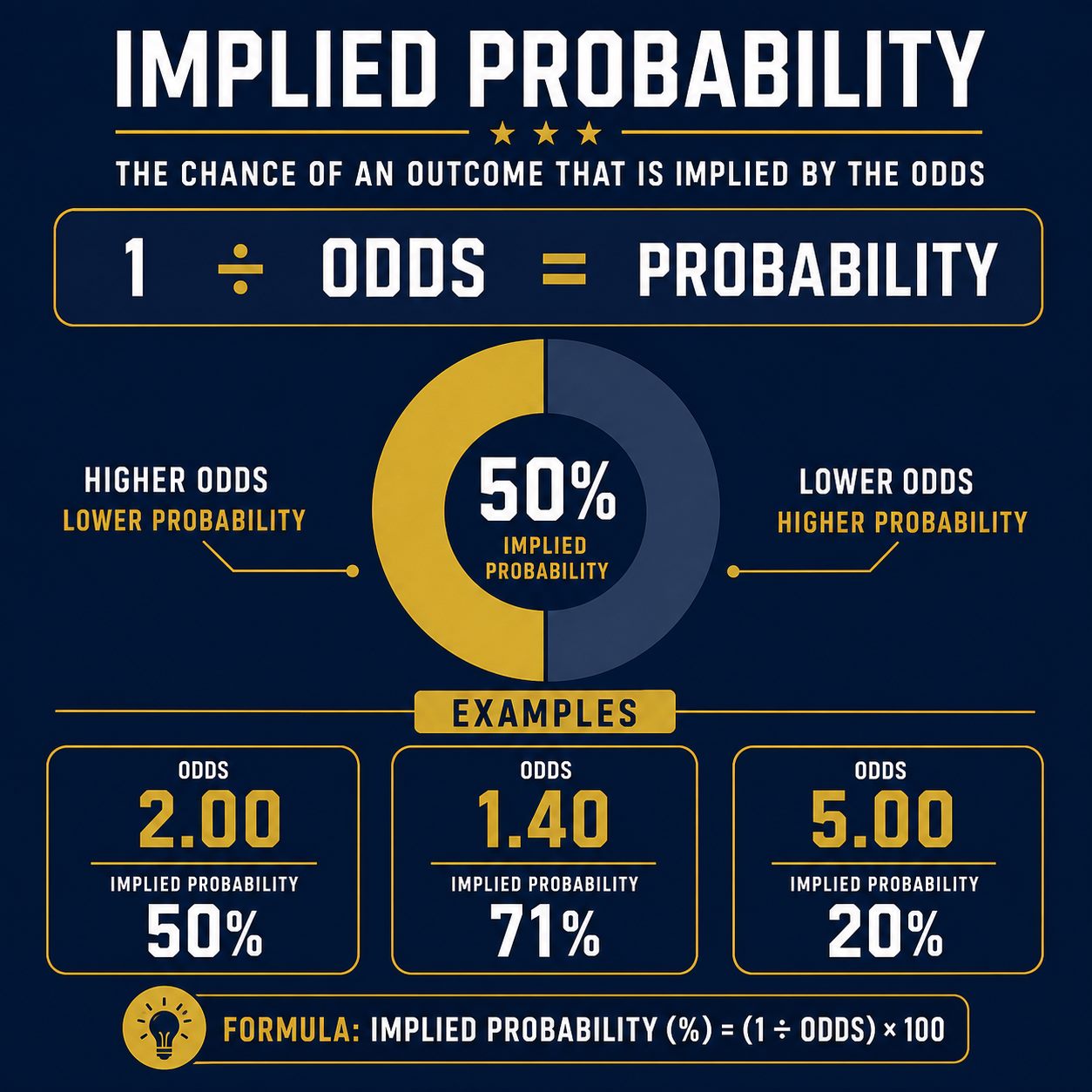
The formula (decimal odds): implied probability = (1 ÷ decimal odds) × 100
Examples:
- Odds of 2.00 → 1 ÷ 2.00 = 0.50 → 50% chance
- Odds of 1.40 → 1 ÷ 1.40 = 0.714 → 71.4% chance
- Odds of 5.00 → 1 ÷ 5.00 = 0.20 → 20% chance
So when you see France at 1.40, the book is pricing them as roughly a 71% favourite. Ask yourself: do I think they are more likely than that to win? If yes, there is value. If no, you are overpaying.
One more thing to notice. If you add up the implied probabilities of every outcome in a match, the total comes to more than 100%. That extra slice (often 105% to 108% across the three results in a 1X2 market) is the bookmaker’s margin, sometimes called the vig or the juice. It is why the house wins over time, and why finding value matters so much.
How to Calculate Your Payout
You will not always have a bet slip calculator, so it pays to do this in your head.
Single bet (decimal): stake × odds = total return. So ₱500 at 3.20 = ₱1,600 total (₱1,100 profit).
Accumulator (multiple selections): multiply all the decimal odds together, then multiply by your stake. This is how small stakes turn into big World Cup payouts, and also why accumulators are harder to win.
- Three picks at 1.50, 2.00 and 1.80.
- Combined odds = 1.50 × 2.00 × 1.80 = 5.40.
- ₱200 stake × 5.40 = ₱1,080 total return.
Remember: in an accumulator, every leg must win. One loss and the whole slip is gone. Beginners chase the big number and forget that four legs at even-looking odds can have a real combined chance under 20%.
🎯 Try the Maths Live
The fastest way to learn is to watch the numbers update as you build a slip. Open a Philippine-friendly sportsbook with peso balances and GCash deposits, switch the display to decimal, and the payout calculates itself.
Reading Odds on the Bet Types You Will Actually Use
The World Cup throws a lot of markets at you. Here is how the odds read on the most common ones.
Match Result (1X2)
Three prices: home win (1), draw (X), away win (2). The lowest number is the favourite. In knockout games that can go to extra time, check whether the market is “90 minutes only” or “to qualify”, because the odds mean different things.
Over / Under (Total Goals)
A single line such as Over/Under 2.5 goals, with a price on each side. Over 2.5 means three or more goals; Under 2.5 means two or fewer. The .5 exists so there is never a tie. World Cup group games involving strong attacks often price Over 2.5 as the favourite.
Asian Handicap
A points head start or deficit applied to a team to remove the draw. The odds look like a normal two-way market, but the handicap (for example -1.0 or +0.5) changes what counts as a win. This is a bigger topic, covered in our dedicated Asian Handicap guide.
Outright (Tournament Winner)
Who lifts the trophy. These are long odds shown weeks in advance, and they shift constantly as teams progress. A 12.00 outright price implies roughly an 8% chance of winning the whole World Cup.
Why Odds Move Before Kickoff
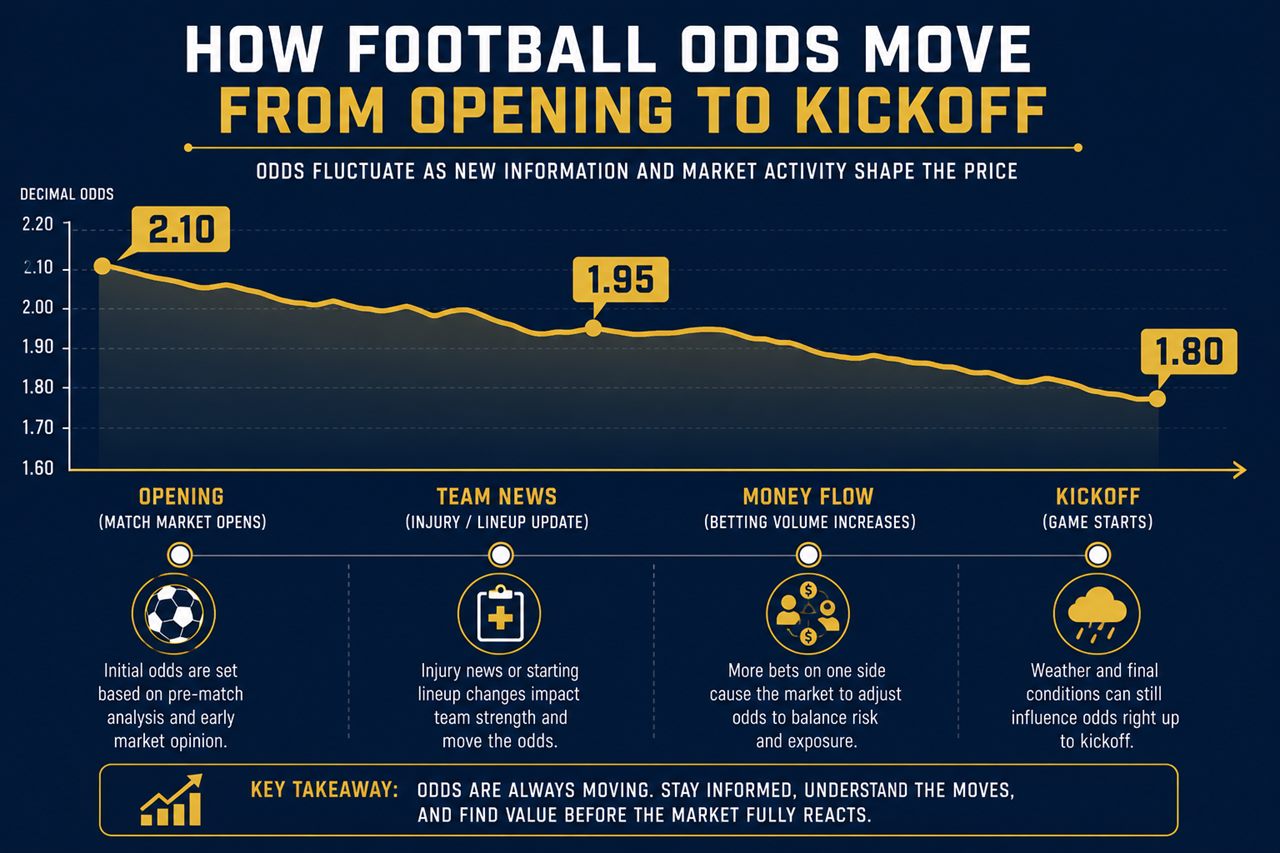
Odds are not fixed. They open early and drift up or down right until kickoff. Understanding why helps you time your bets.
- Team news: a star striker ruled out can lengthen a team’s odds within minutes.
- Money flow: when lots of bettors back one side, the book shortens those odds to balance its risk.
- Weather and pitch: heavy rain can nudge Under markets shorter.
- Sharp action: large, informed bets move lines fast, which is why early prices sometimes offer the best value.
The practical lesson: if you have a strong read on a match, betting early often gets you a better price than waiting until kickoff, when the public money has already squeezed the value out.
Where Filipino Bettors Read and Compare Odds
For players here, a few local realities matter:
- Mobile first. Most Filipino bettors check odds on a phone, so a clean mobile odds board and fast GCash or Maya deposits matter as much as the prices themselves.
- Peso display. Sportsbooks that show balances and payouts in peso save you the mental currency conversion.
- Compare before you bet. The same Brazil win might be 1.80 on one site and 1.95 on another. Over a tournament, always taking the better price is free money.
⚽ Put It Into Practice
Ready to read a real World Cup 2026 board on a platform built for Filipino players, with peso balances and GCash deposits? Our top picks accept GCash and Maya and show odds in decimal by default.
Common Mistakes Beginners Make Reading Odds
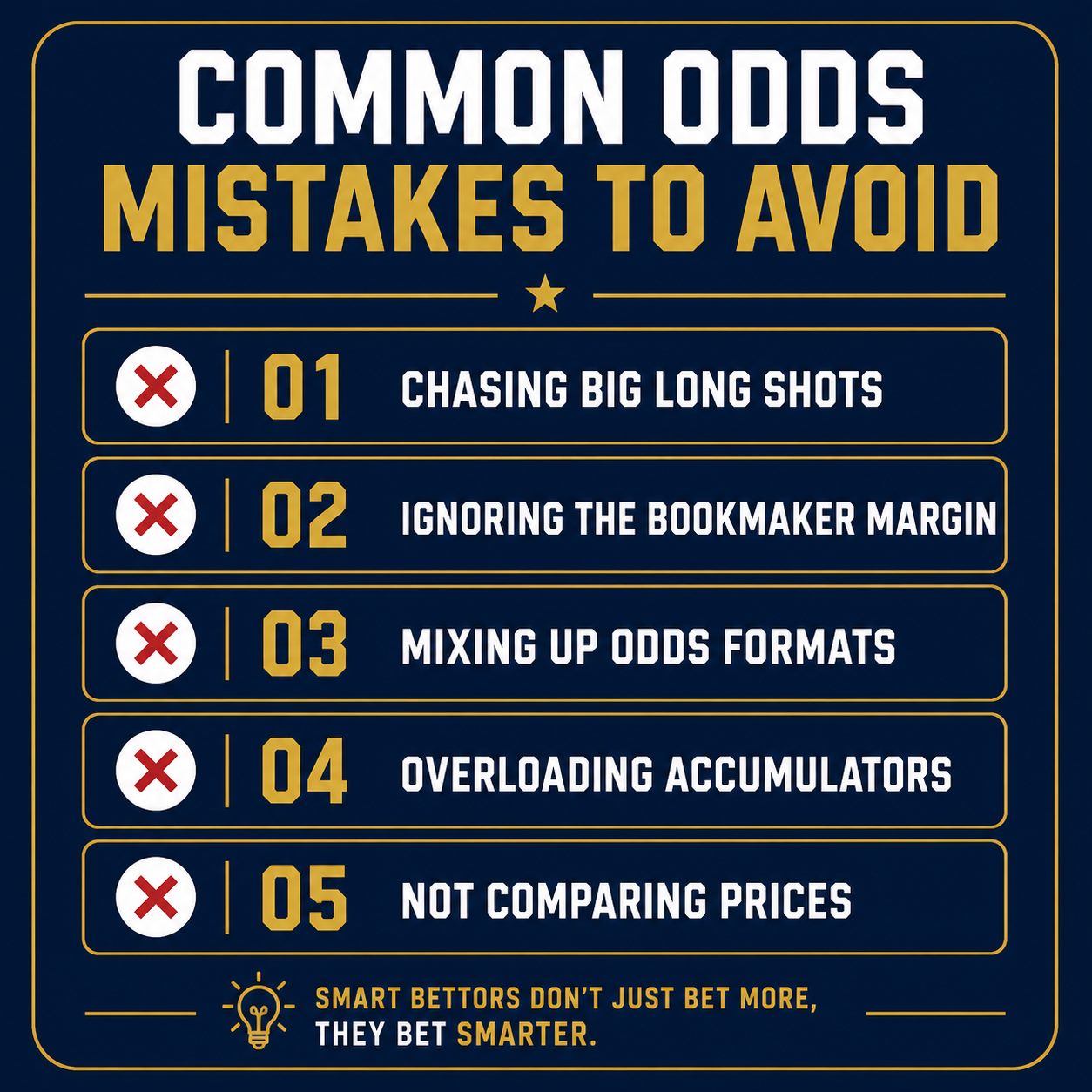
- Chasing big numbers. A 15.00 outsider looks exciting, but the odds are telling you it almost never happens. Long odds are not free lottery tickets.
- Ignoring the margin. Not checking implied probability means you overpay on favourites without noticing the vig.
- Mixing up formats. Reading +150 as if it were decimal odds leads to nasty surprises. Always confirm which format the screen is set to.
- Forgetting the stake is included (decimal). Decimal odds already include your stake in the return; do not double count your profit.
- Overloading accumulators. Each extra leg multiplies the risk, not just the payout.
- Betting without comparing. Taking the first price you see leaves money on the table every single bet.
Practical Tips to Read Odds Like a Pro
- Switch your display to decimal. It makes payout maths a one-step multiplication.
- Memorise three reference points: 2.00 = 50%, 1.50 = 67%, 4.00 = 25%. Everything else you can estimate from there.
- Always glance at implied probability before backing a favourite. Ask if the real chance beats the price.
- Keep a betting log in peso: stake, odds, outcome. After 20 bets you will see patterns in your own reading.
- Compare at least two sportsbooks for any bet over ₱500. The better price compounds over a tournament.
- Set a weekly cap before kickoff, not during the match. Reading odds well is useless if your bankroll discipline is not.
Frequently Asked Questions
What does +150 mean in betting?
It is a moneyline (American) price for an underdog. A ₱100 stake wins ₱150 profit, for a total return of ₱250. In decimal odds that is 2.50.
Which odds format is used in the Philippines?
Most sportsbooks used by Filipino players default to decimal odds, because they are the simplest for calculating peso payouts. You can usually switch formats in the settings.
How do I calculate my payout from decimal odds?
Multiply your stake by the decimal number. That total already includes your stake. For example, ₱500 at 2.40 returns ₱1,200, which is ₱700 profit plus your ₱500 back.
What is implied probability?
It is the chance an outcome has according to the odds. For decimal odds, divide 1 by the odds and multiply by 100. Odds of 2.00 imply a 50% chance.
Why do the odds keep changing before a match?
Odds move because of team news, injuries, weather and the balance of money bet on each side. Betting early often locks in a better price before the public money shifts the line.
Are higher odds always better?
No. Higher odds pay more but reflect a lower chance of winning. The goal is value: finding odds that are higher than the true probability of the outcome, not just the biggest number on the board.
Related Reading
- The Complete World Cup 2026 Betting Guide for Filipinos (Hub)
- Kylian Mbappe at World Cup 2026: Golden Boot Odds
- 2026 FIFA World Cup Team Squads: 5 Tactics to Watch
- World Cup 2026 Schedule in Philippine Time (PHT)
- Asian Handicap Explained: World Cup 2026 Edition
- Over/Under Betting on World Cup 2026 Matches
- World Cup 2026 Favourites: Who Will Win?
- World Cup 2026 Match Times in the Philippines
- World Cup 2026 Betting Tips for Beginners
This page contains affiliate links. We may earn a commission when you sign up through these links, at no extra cost to you. Our recommendations are based on independent research and hands-on testing; commercial relationships do not influence our editorial standards.
Betting on the World Cup should be entertainment, never a way to make money or chase losses. You must be 21 years or older to bet in the Philippines. Set a weekly limit before the tournament starts and never bet money you cannot afford to lose. If gambling stops being fun, free and confidential support is available at BeGambleAware.org. Bet with your head, not over it.